


How To Remove Black Stains From Wooden Cutting Boards

We spoke recently about the 4 main causes of black stains or spots appearing on a wooden cutting board.
The 2 most likely reasons for the black stains is either staining from potatoes or mold
Potatoes are a real staple in most meals, and many people prepare them on a large cutting board several times a week.
Also, we live in a modern world where we are used to soaking utensils in water, or throwing items into the dishwasher to clean.
Many people forget that a wood is a natural, living substance, and will drench their boards to ‘thoroughly clean’, even though studies have shown that this is completely unnecessary as wood surfaces have natural, antibacterial properties.
All your wooden cutting board actually requires, after use, is a wipe over with some detergent and water.
Using certain cooking oils on your board, such as olive, sunflower and corn, can also promote mold growth.
The least likely is a reaction happening between the wood surface and the iron in carbon steel kitchen knives.

How To Remove Black Stains:
1.) Mix up some warm water and dish detergent. Dip a scouring sponge into this solution, and use small, circular motions all over the black stains.
Make sure you do not drench the board! Too much water getting inside the wooden core, and then not allowing the board to thoroughly dry out, is one cause of these black stains, so don’t repeat the mistake by drenching the board again here.
If this has successfully removed the black stains, wipe the board dry with an absorbent towel, and place in a dry place and allow it to completely dry. This can take from an hour to several days, depending on the air temperature and humidity of where you leave your cutting board.
We find leaving the board in strong sunshine for a few days the best option, but if you don’t live somewhere that can guarantee sunshine for several days, just find a dry place where there is not much likelihood of condensation or damp.
If the black stains have not been removed by detergent, go to step 2.
2.) Wipe away the detergent with some warm water, and use a metal spatula, at a 45 degree angle, to scrape off as much of the stains as possible.
If all the stains have now gone, wipe the board with water, soak up surface water with an absorbent towel, and leave to dry, as instructed in step 1.
If some black stains persist, move to step 3.
3.) Mix up a solution of 1 part chlorine bleach with 16 parts water, spray onto the surface of your wooden cutting board, and use small, circular motions on the black stains with a stiff brush to lift them off.
Now, wipe the board with water, soak up surface water with an absorbent towel, and leave to dry, as instructed in step 1.
NEVER use undiluted bleach on your wooden cutting board. Yes, you’ll get rid of the black stains, but you’ll also discolor the whole surface!
Also, with chlorine bleach, wear safety glasses and rubber gloves, and make sure you work in a well-ventilated area.
This step should remove black stains for over 90% of wooden cutting boards out there.
If the problem still persists, and you have some extremely stubborn stains, move to step 4.
4.) Spray a large amount of specialist wood soap onto the surface of your wooden cutting board, and use an abrasive disc or pad (such as a 3M type) to remove the black stains.
Now, wipe away the soap with a cloth dampened with water, soak up surface water with an absorbent towel, and leave to dry, as instructed in step 1.
If following this step has still not removed all the stains, move to step 5.
5.) Use Oxalic acid (normally sold as ‘wood bleach’), blot it onto all the black stains, and then leave a cloth soaked in this solution over the stains for several hours.
If you have gone through all the steps above, then chances are it is not mold or potato starch that is causing stains on your wooden cutting board.
The likely cause is iron in your carbon steel kitchen knives that is reacting to the wood.
Be careful using oxalic acid as it can be dangerous if inhaled or it gets into your eyes. Wear safety glasses and rubber gloves, and make sure you work in a well-ventilated area.
Now wipe the board well with a solution of 1 part water with 1 part white vinegar, and leave to dry as instructed in step 1.
Keep in mind, if the main cause of the black stains was a damp wooden core, you may find the black stains reappear after drying.
This is because you may have unintentionally drenched the board some time ago, and the wooden core has remained damp for some time.
The mold, therefore, can reappear. Don’t worry, just repeat whichever step worked best for you above.
Even if it takes a few cycles of this until the black stains no longer reappear, at least once they’re gone, you will know never to drench your board, or leave it somewhere damp, ever again!

Protect The Board After Removing Stains
Remember, wood is a living, breathing substance. After all that scrubbing, and possibly even using harsh chemicals like bleach or oxalic acid, it needs a little love to keep the wood grain nourished and healthy.
We recommend that you season your wooden cutting board with oil.
Also, with regular oil seasoning, you help eliminate the chances of stains coming back as a well-oiled wood surface repels moisture from getting into the core, repels potato liquid, repels cooking oils, and can even reduce the chance or iron from carbon steel blades reacting with it.
Let’s face it, prevention is a lot easier than cure!
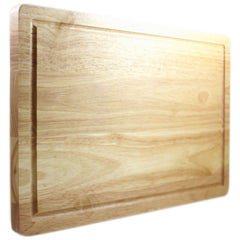
Why not grab yourself the Chef Remi Cutting Board right now?
They’re currently on offer at only $19.95! But you can get a further 15% OFF your entire order today! (Limited Offer).


Comments
Shakila Sheheran#1
Really a nice article and I found a best way to remove black strains in my cutting board. Now I dont want to buy a new one. I can make my old one as new through this post. Lovely post…